

By Ali Bolourchi, RE/MAX Your Community Realty Brokerage
Published April 2026 · 12-minute read · For accredited and general real estate investors
Traditional Ontario landlording is being squeezed from both sides: carrying costs up 24–29% since 2022, rents up only 12–15%, and RTA eviction timelines stretching 12–18 months. Rent-to-Own offers a fundamentally different investor model — one where your property generates option income, premium rent, a locked capital gain, and motivated tenant care, all at the same time.
This guide explains exactly how Ontario investors profit from Rent-to-Own (RTO), with three fully worked scenarios across Hamilton, Kitchener-Waterloo, and Barrie — all based on current 2026 market data — plus the legal documents, risk framework, and tenant selection criteria you need to structure deals that actually close.
Important: Every RTO transaction is unique and subject to Ontario's Mortgages Act, Residential Tenancies Act, and REBBA. All scenarios are illustrative. Always retain independent legal and financial advice before entering any RTO agreement.
Why Traditional Ontario Landlording Is Under Pressure in 2026

The numbers tell a stark story for Ontario's traditional buy-and-hold landlords. Toronto's gross rental yield sits at approximately 5.8% — but after deducting maintenance, property management, insurance, and taxes, net yields collapse to the 3–4% range. With 5-year fixed mortgage rates still hovering near 5–5.5%, many landlords are cash-flow negative from day one.
Ontario's active listings stood 35.5% above the five-year average as of March 2026, and secondary markets like Hamilton (−8.6% YoY), Kitchener (−5.0% YoY), and Barrie are firmly in buyer's market territory. That combination — motivated sellers, corrected prices, and a large pool of renters who want to own but cannot yet qualify — creates ideal conditions for the RTO investor model.
The Investor's Four Revenue Streams from a Single RTO Property

Stream 1 — The Option Fee (Day-One Return)
The tenant-buyer pays you a non-refundable Option Fee — typically 3–5% of the agreed purchase price — on the day they sign. This money is yours immediately. If the tenant exercises the option and buys, it is credited toward their down payment (reducing your final proceeds by that amount). If they walk away, you keep the entire fee with no obligation to refund it. On a $669,900 RTO price, a 3% option fee = $20,100 in your account on Day 1.
In practice: $20,100 on a $669,900 RTO deal — collected before the tenant moves in
Stream 2 — Premium Monthly Rent (Cash Flow)
RTO tenants pay above-market rent because they are buying time and locking in a future purchase price. A portion of the premium is credited back to them monthly (building their down payment), while the remainder is pure income to you. In a Hamilton RTO at $2,800/month versus market rent of $2,200: $300/month goes back to the tenant as a credit, and $300/month is your pure premium income — $10,800 over three years — on top of the base rent.
In practice: $300–$450/month pure premium income above the rent credit obligation
Stream 3 — The Locked-In Capital Gain
You set the RTO sale price today at a premium above your purchase price — locking in your future capital gain before the market recovers. Buying in a corrected secondary market and setting an RTO price 6–8% above your purchase cost crystalizes a profit that is agreed to in writing, regardless of what the market does between now and the option exercise date. This is the inverse of traditional landlording, where your exit price is unknown.
In practice: 6–8% premium above purchase price = $40,000–$60,000 locked gain (depending on market)
Stream 4 — Mortgage Paydown by the Tenant's Rent
Every month that the tenant pays rent, a portion of your mortgage is paid down by their payments. Over a 3-year (36-month) RTO term, a $500,000 mortgage at 5.5% will see approximately $25,000–$28,000 in principal reduction — equity that is yours whether the tenant buys or not. Combined with the other three streams, the RTO structure extracts maximum value from a holding period that traditional landlords treat as a waiting game.
In practice: ~$25,000–$28,000 in principal reduction over a 3-year term on a $500K mortgage
Three Fully Worked Investor Scenarios — 2026 Secondary Markets
The following scenarios use current market data (ali.realtor, OREA, Zumper, April 2026). All figures are illustrative and for educational purposes only. Actual returns depend on financing terms, market conditions, and individual negotiation.
SCENARIO A · HAMILTON, ONTARIO
Hamilton 3-Bedroom Townhouse — Entry-Level Investor Play
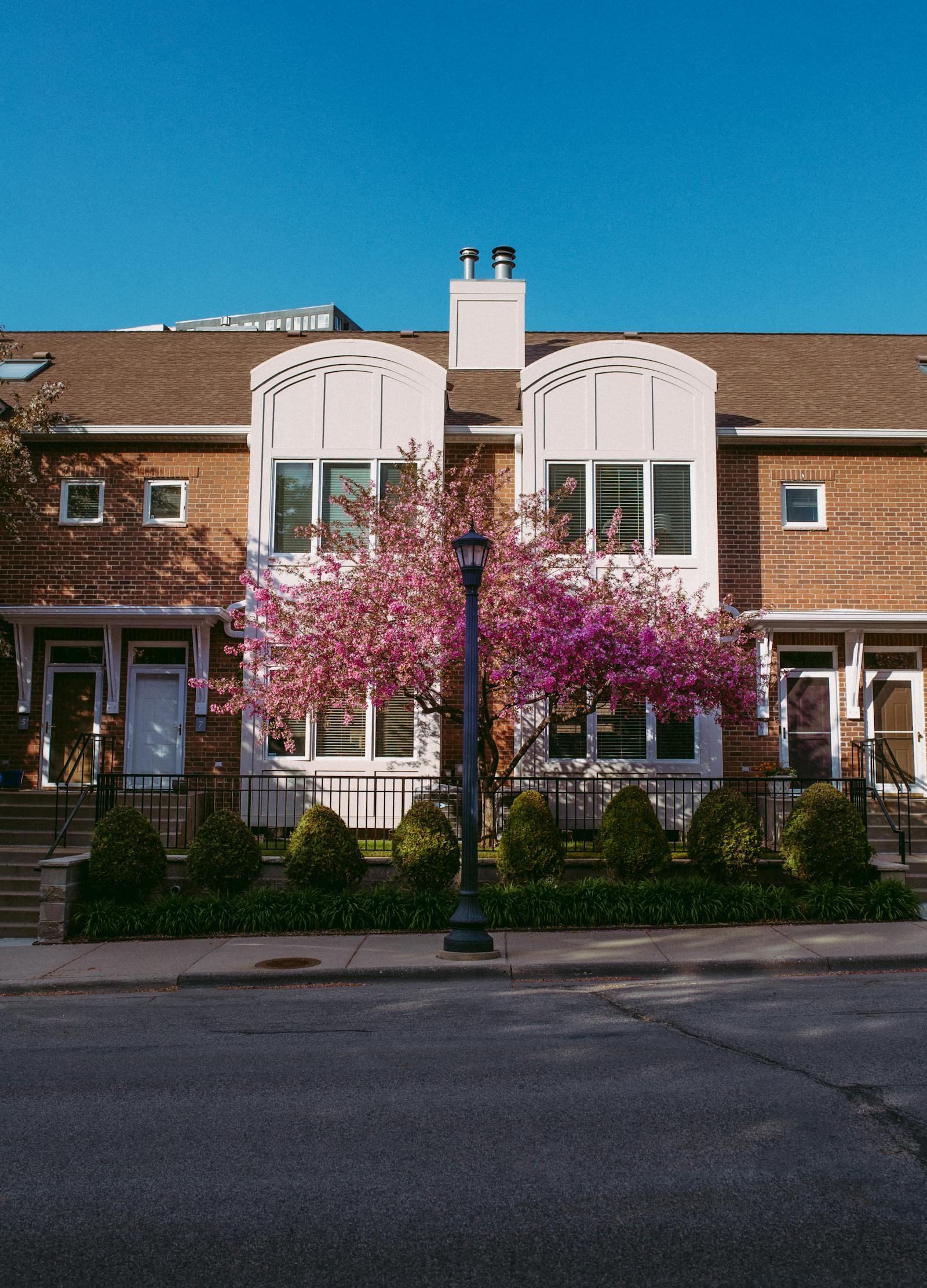
Hamilton is Ontario's deepest-corrected secondary market in 2026, with townhouse prices down 11.1% YoY to $607,500. Investors who buy now and lock in RTO sale prices at a 6–8% premium are capturing today's discount while selling at tomorrow's normalized value. GO Transit connects Hamilton to Union Station in under 70 minutes, sustaining strong tenant-buyer demand from GTA professionals.
Deal Structure at a Glance
If Tenant-Buyer Exercises the Option (Best Case)
If Tenant-Buyer Walks Away (Fallback Case)
Investor note: Hamilton represents the lowest risk-adjusted entry due to the deepest correction and strong GO Transit fundamentals.
SCENARIO B · KITCHENER-WATERLOO, ONTARIO
Kitchener-Waterloo 3-Bedroom Semi-Detached — Tech Sector Stability Play
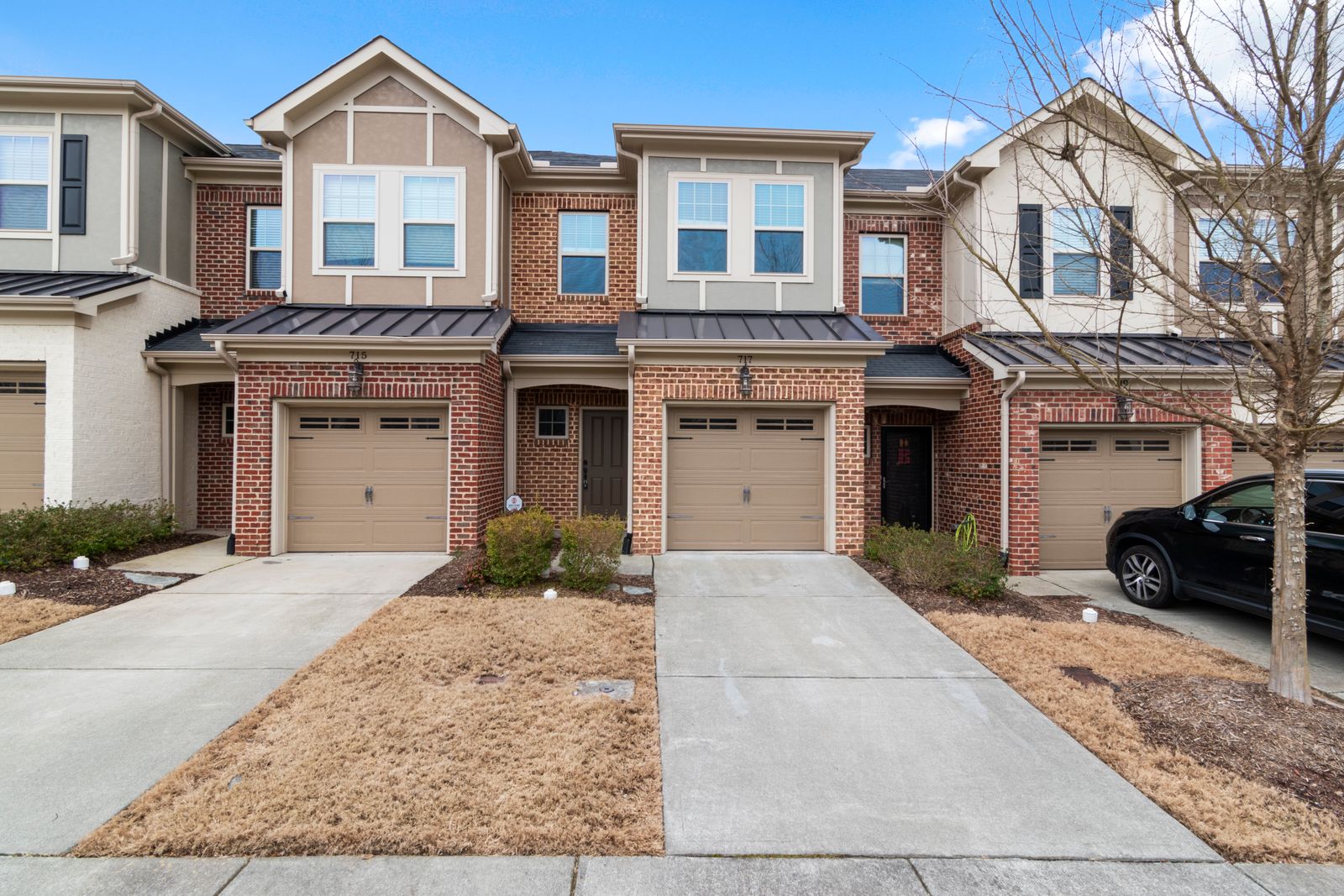
The Waterloo Region's employment base — Google, Shopify, BlackBerry, two universities — creates a deep pool of well-employed renters who are 12–24 months from mortgage qualification. Home prices corrected 5.0% YoY to $733,258 but fundamentals remain strong. This is the ideal tenant-buyer profile: stable income, improving credit, committed to staying in the region long-term.
Deal Structure at a Glance
If Tenant-Buyer Exercises the Option (Best Case)
If Tenant-Buyer Walks Away (Fallback Case)
Investor note: The Waterloo Region's institutional employment base means tenant-buyers here have the strongest mortgage qualification trajectory of the three scenarios.
SCENARIO C · BARRIE, ONTARIO
Barrie 3-Bedroom Detached Home — RE/MAX 2026 Top Growth Market Play

RE/MAX's 2026 Canadian Housing Outlook projects Barrie home sales to increase 10% — the largest forecasted jump of any Ontario market. GO Train service from Barrie to Union Station enables hybrid commuting, and the city's growing tech and healthcare employment base supports premium RTO rent. Investors who buy now and lock in an RTO sale price have the widest margin for appreciation upside of the three markets.
Deal Structure at a Glance
If Tenant-Buyer Exercises the Option (Best Case)
If Tenant-Buyer Walks Away (Fallback Case)
Investor note: Barrie carries the highest upside but also the highest risk — it depends on the 10% sales growth projection materializing. Best for investors with a 5–7 year horizon who can absorb a re-let if the tenant walks.
Three Markets, Side by Side — Investor Return Comparison
All return figures are before income tax, capital gains tax, and transaction costs (legal fees, land transfer tax at purchase, etc.). Consult a qualified accountant and lawyer before making investment decisions.
Five Risks Every RTO Investor Must Manage

Risk 1: Tenant-Buyer Cannot Qualify for a Mortgage at Term End
This is the most common failure point. The tenant walks because they never fixed their credit or income. Mitigation: Before signing any RTO agreement, have the tenant-buyer assessed by a mortgage broker. Get a written outline of exactly what they need to qualify — credit score target, income documentation, down payment threshold — and build those milestones into the lease as check-in conditions.
Risk 2: Market Depreciation Makes the RTO Price Unacceptable to the Tenant
If the market falls significantly during the term, a tenant-buyer may walk because they can buy the same home cheaper elsewhere. You keep the option fee, but re-marketing takes time. Mitigation: Buy in markets with strong employment and GO Transit fundamentals. Avoid niche rural markets where re-letting is difficult.
Risk 3: Ontario's Mortgages Act May Classify Your RTO as a Mortgage
Certain RTO structures in Ontario can be deemed mortgages under the Mortgages Act, triggering disclosure obligations and potentially requiring a mortgage broker licence. Mitigation: This is non-negotiable — engage a qualified Ontario real estate lawyer before structuring any RTO deal. The legal cost ($1,500–$2,500) is minimal compared to the risk.
Risk 4: Ontario RTA Protections Apply During the Lease Phase
Your tenant-buyer is also a tenant, and Ontario's Residential Tenancies Act fully applies. If they stop paying rent, you cannot simply evict them — you go through the LTB, which averages 12–18 months. Mitigation: Screen rigorously. The option fee creates strong incentive to stay current. Also include clear lease terms with immediate notice for non-payment.
Risk 5: Market Appreciation Exceeds Your Locked RTO Price
If the market surges during the term, the tenant buys at the locked price and you leave appreciation money on the table. This is the "good problem" risk — you still profit as planned, you just miss additional upside. Mitigation: Set the RTO price at a meaningful premium (7–10%) above your purchase price to capture a reasonable share of expected appreciation.
How to Find and Screen Your Ideal Tenant-Buyer

The quality of your tenant-buyer determines almost everything. The ideal candidate is someone who genuinely wants to own their home, has a realistic path to mortgage qualification in 2–3 years, and has the financial discipline to maintain both the property and their savings plan.
The Ideal Tenant-Buyer Profile
· Credit score: 640–720 today, targeting 720+ at option exercise
· Employment: Stable T4 employment — ideally 2+ years with the same employer
· Income: Household income sufficient to qualify at stress-test rates (typically $130K–$175K for these scenarios)
· Self-employed: At least 1 year of clean NOA history, ideally 2 — improving year over year
· Option Fee: Has 3–5% of the purchase price saved — this proves financial discipline
· Motivation: Has specific reasons for not qualifying today — credit repair, new employment, immigration history — with a clear plan to resolve each
· Mortgage broker: Willing to engage a mortgage broker before signing for a pre-assessment
Red Flags to Avoid
· Cannot explain specifically why they don't qualify for a mortgage today
· Unwilling to have their finances reviewed by a mortgage broker before signing
· Option Fee comes from a loan or borrowed money rather than savings
· History of multiple short-term rentals (6 months or less) — signals volatility
· Vague about employment — self-employed with no NOA history
· Asking for more than 5% rent credit — may indicate they cannot save independently
Where to Find Tenant-Buyers
Partner with the Ali Bolourchi Real Estate Team at ali.realtor — we actively market RTO listings to motivated buyers across The Golden Horseshoe, GTA, Hamilton, Kitchener-Waterloo, Barrie, Oshawa, Guelph, and London. Our network of mortgage brokers can pre-screen candidates before you commit to any agreement.
· List the property on MLS as "Lease with Option to Purchase" or "Rent-to-Own"
· Market through mortgage brokers who work with pre-qualification clients
· Community boards, newcomer networks, and employer housing assistance programs
· Social media campaigns targeting first-time buyers and self-employed professionals in your target city
The Investor's Legal Toolkit: OREA-Aligned Clauses
The following are educational clause drafts only. Every RTO investment agreement must be reviewed by a qualified Ontario real estate lawyer before signing. These clauses are adapted to protect investors while remaining compliant with Ontario's Residential Tenancies Act and Mortgages Act.
OPTION TO PURCHASE (Investor/Seller Version):
In consideration of the Option Fee of [AMOUNT IN WORDS] [$AMOUNT] Dollars paid by the Tenant/Buyer to the Landlord/Seller (the "Investor"), receipt of which is hereby acknowledged, the Investor hereby grants to the Tenant/Buyer the exclusive and irrevocable option to purchase the property municipally known as [PROPERTY ADDRESS], in the [City], Ontario (the "Property"), for the fixed purchase price of [PRICE IN WORDS] [$PRICE] Dollars (the "Option Price"). This option shall expire at 9:59 p.m. on the last day of the [TERM]-month lease term (the "Option Expiry Date"). Written notice of exercise must be delivered to the Investor no later than 9:59 p.m. on the Option Expiry Date. The Option Fee is NON-REFUNDABLE in all circumstances, including but not limited to the Tenant/Buyer's failure to obtain mortgage financing or failure to exercise this option within the stated time. Upon exercise, the parties shall execute a formal Agreement of Purchase and Sale incorporating standard OREA terms at the Option Price stated herein. The Investor makes no representations regarding the Property's market value at the time of exercise. The Tenant/Buyer acknowledges that independent legal advice has been recommended.
RENT CREDIT (Investor Protection Version):
The Parties agree that of the monthly rent of [TOTAL RENT IN WORDS] [$RENT] Dollars per month, the sum of [CREDIT IN WORDS] [$CREDIT] Dollars per month (the "Rent Credit") shall be accumulated by the Investor and applied solely toward the Option Price at closing, provided the Tenant/Buyer validly exercises the Option to Purchase within the time stated herein. Rent Credits shall: (a) not be paid to the Tenant/Buyer in cash under any circumstances; (b) not bear interest; (c) be forfeited in their entirety if the option is not exercised by the Option Expiry Date or if the Tenant/Buyer is in default under the Lease at the time of exercise; and (d) not reduce the Tenant/Buyer's monthly rent obligation during the term. The Tenant/Buyer acknowledges that Rent Credits do not constitute a security deposit or any form of refundable amount under the Ontario Residential Tenancies Act.
CONDITION — FINANCING (At Exercise of Option, Investor Version):
This Offer is conditional upon the Buyer arranging, at the Buyer's own expense, a new Charge/Mortgage for not less than [MORTGAGE IN WORDS] [$AMOUNT] Dollars, bearing interest at a rate of not more than [RATE]% per annum, calculated semi-annually not in advance, repayable in blended monthly payments, to run for a term of not less than Five [5] years from the date of completion. Unless the Buyer gives notice in writing to the Seller not later than 9:59 p.m. on the Tenth [10th] day following acceptance of this Offer that this condition is fulfilled, this Offer shall be null and void. In the event this condition is not fulfilled, the Option Fee and all accumulated Rent Credits shall be retained by the Seller as agreed liquidated damages, and shall not be refunded to the Buyer. This condition is included for the benefit of the Buyer and may be waived at the Buyer's sole option by notice in writing to the Seller within the time period stated herein.
Your First RTO Deal: A Step-by-Step Action Plan
Step 1 Engage Your REALTOR
Partner with the Ali Bolourchi Real Estate Team to identify corrected secondary market properties in Hamilton, Kitchener, Barrie, Oshawa, or Guelph that are positioned for RTO. We'll run the acquisition numbers and help you set the optimal RTO price and option fee.
Step 2 Engage an Ontario Real Estate Lawyer
Before any offer is made, retain a lawyer who understands both the RTA and Mortgages Act implications of RTO structures. Budget $1,500–$2,500 for the initial document review and $1,500–$2,500 at closing.
Step 3 Acquire the Property
Buy in a corrected secondary market at today's buyer-friendly prices. Negotiate hard — sellers are motivated, days-on-market are elevated, and your unconditional-ready financing position gives you leverage.
Step 4 Find and Screen Your Tenant-Buyer
Market the property as an RTO opportunity through your REALTOR, mortgage broker network, and targeted social media. Have every serious candidate pre-assessed by a mortgage broker before you proceed to documentation.
Step 5 Execute Both Agreements
Sign the Lease and the Option to Purchase simultaneously. Collect the Option Fee on signing. Have your lawyer register a notice of the option agreement on title. Begin the 36-month clock.
Step 6 Manage the Term
Check in quarterly with your tenant-buyer on their mortgage qualification progress. Connect them with your mortgage broker at the 18-month mark for a mid-term assessment. Motivated buyers who are on track become even more motivated — protecting your exit.
Step 7 Close or Reset
At term end, either close the sale and collect your locked capital gain, or retain the option fee, re-assess the property, and structure a new RTO agreement with a fresh tenant-buyer at updated market terms.
Ready to Build Your RTO Investment Portfolio?
The Ali Bolourchi Real Estate Team at RE/MAX Your Community Realty has the market expertise, investor network, and legal referral connections to help you structure profitable RTO deals across Ontario's best secondary markets. We've helped investors in Hamilton, Kitchener, Barrie, Oshawa, Guelph, and London identify corrected-market opportunities, negotiate RTO terms, and connect with qualified tenant-buyers — turning underperforming landlord situations into premium-yielding, defined-exit investment strategies.
Book your Investor RTO Strategy Session at ali.realtor
RE/MAX Your Community Realty Brokerage*
.png)